
West Africa’s healthcare system faces significant challenges
A Big Problem
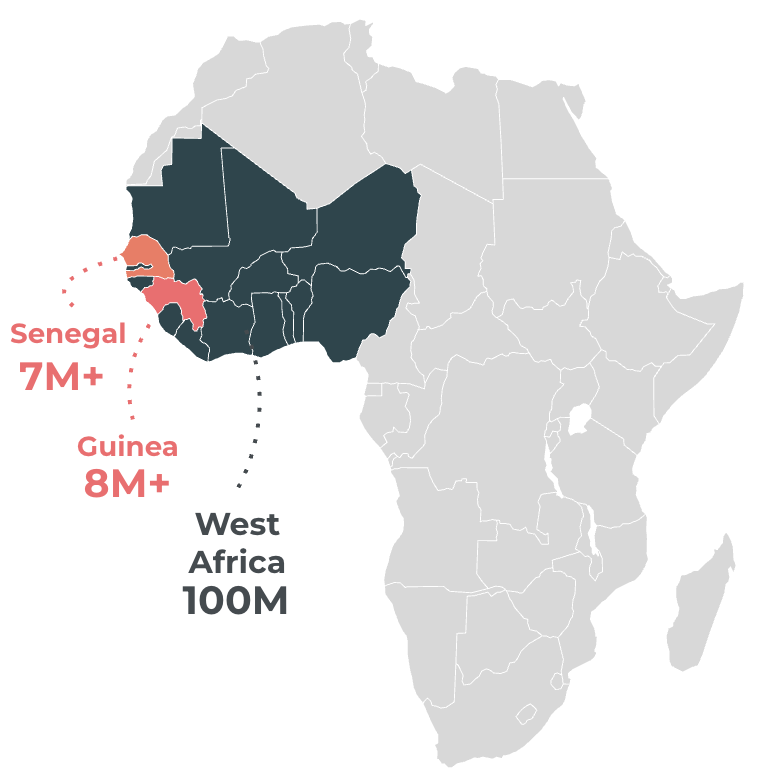
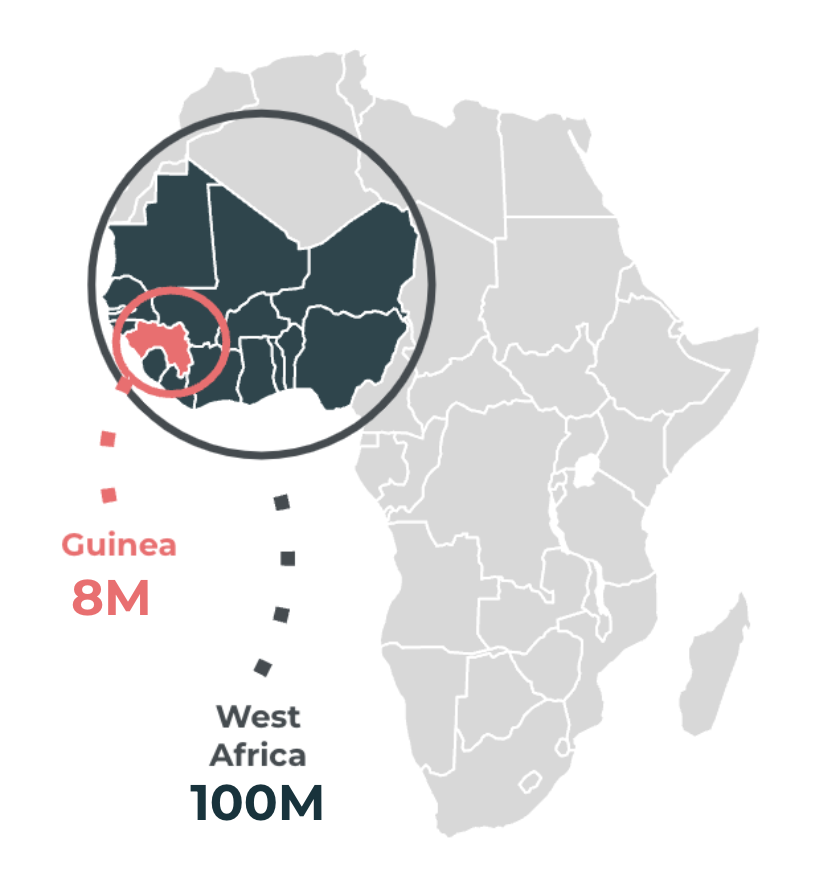
100M people in the region lack access to primary care services
More than 8M people in Guinea are without access to reliable quality healthcare
At least 7M people of Senegal rural population are unable to afford at least basic healthcare

Guinea’s healthcare system
faces significant structural challenges
<60% of the population lives in multidimensional poverty*
<70% live too remote from reliable affordable health care*
Severe Healthcare Workforce Shortages With only 1 physician per 10,000 people and 4 nurses per 10,000, many regions lack adequate medical personnel.
Geographic & Economic Barriers
Rural populations often travel long distances to access care, incurring prohibitive transportation and service costs.
Fragmented Health Data Systems
The absence of digitized patient records leads to inefficient case management and poor disease surveillance.
High Prevalence of Preventable Diseases Malaria, hypertension, maternal complications, and respiratory infections remain leading causes of mortality due to delayed diagnosis and treatment.
* Multidimensional metrics complement monetary poverty metrics by measuring non-monetary deprivations including schooling, housing, drinking water, electricity, sanitation, and cooking fuel (UNDP 2023)
How Communities and Systems Are Changing
We’re already seeing clear signs of systemic transformation driven by the Clinic+O model.
Short-Term (1–2 Years):
Community health workers and clinic staff are delivering care based on national guidelines, improving consistency and patient trust.
Community awareness campaigns and routine screenings are leading to earlier detection of high-burden NCDs, enabling better long-term outcomes.
Digital records allow for continuity of care across visits and facilities, ensuring patients don’t fall through the cracks.
Government ministries and district health teams are actively engaged and supportive, helping to codify the model and drive expansion.
Intermediate (2–5 Years):
Data from rural clinics show measurable improvements in chronic disease indicators, including better blood pressure control and reduced complications from diabetes.
Digital tools are becoming standardized and sustained across multiple regions, proving the replicability of our model.
Policymakers and health leaders are using real-time data to allocate resources, refine protocols, and set health priorities.
Equity gaps are narrowing, with rural and underserved communities gaining consistent access to care that was previously out of reach.